
Emotions & Relationships
Why Humans Overthink—and What Helps Us Break the Loop
Why a single remark can replay for hours, how reflection differs from rumination, and what researchers say helps thinking turn useful again.
Topic
Why we think, delay, doubt, and drift.
The mind is a poor narrator of its own workings. You decide to start the report, and an hour later you have reorganized your desk, answered three messages, and settled a debate with yourself that nobody asked you to hold. This hub looks at those ordinary scenes and asks what research can and cannot say about them.
Expect careful claims here. Many findings come from small or Western student samples, and some famous results have not replicated well, so we say so. Start with overthinking or procrastination if you like a practical entry point, or with belief and misinformation if you prefer a puzzle.
Start here
Emotions & Relationships
Why a single remark can replay for hours, how reflection differs from rumination, and what researchers say helps thinking turn useful again.
In Mind & Behavior

Mind & Behavior
Remembering is closer to rebuilding a scene than replaying a recording. Classic experiments show how details shift, and why the research is still debated.

Emotions & Relationships
Festinger's social comparison theory, what experiments show about upward and downward comparison, and why social media findings are mixed.

Meaning & Everyday Life
Physical activity is linked to better health, mood and thinking. Trials suggest modest cognitive benefits, so here is what is solid and what is overhyped.

Mind & Behavior
We spend roughly a third of life asleep, yet the core purpose of sleep is still debated. Here is what is well supported, and what remains…

Emotions & Relationships
A closer look at the belongingness hypothesis: what it claims, what supports it, and where the evidence is still more suggestive than settled.

Meaning & Everyday Life
Wanting to change and actually changing are different problems. Status quo bias, habit research and stage models each explain a piece, and each has limits.

Meaning & Everyday Life
Many adults feel years rush by, yet studies find the age effect small. Three explanations compared: proportion, memory and time pressure.

Culture & Society
Repetition, fluency, identity and trust all shape what feels true. What research shows about false beliefs, what backfires less than assumed, and what helps.

Meaning & Everyday Life
Psychologists separate having meaning from searching for it. Here is what research on purpose, coherence and significance suggests, and where it stops.
Mind & Behavior
Distraction is less a character flaw than a mismatch between a flexible attention system and an environment full of interruptions. Here is what research shows.
Emotions & Relationships
Loneliness is a gap between the connection we have and the connection we want, which is why it can show up in a crowd. What research…
Emotions & Relationships
Why a single remark can replay for hours, how reflection differs from rumination, and what researchers say helps thinking turn useful again.
Watch
 Length 1:45
Mind & Behavior
A short film on worst-case thinking: why an unanswered message can send the mind toward bad explanations, and how an instinct tuned for danger can generate…
 Length 3:48
Mind & Behavior
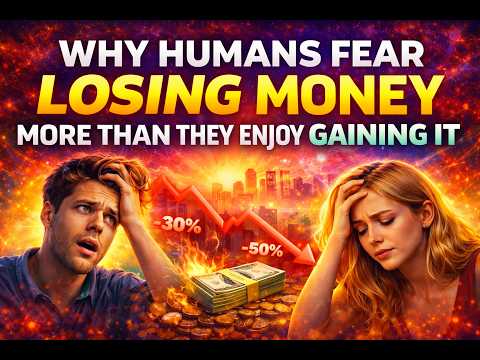
A look at loss aversion: why losses tend to feel heavier than equal gains, and how that shapes reactions to financial uncertainty.
 Length 3:45
Mind & Behavior
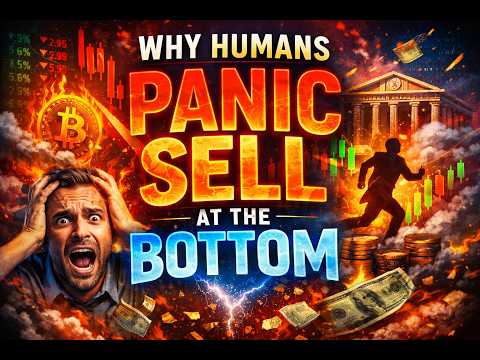
An episode on emotional decision-making in falling markets, covering fear, herd behavior and loss aversion. The channel's description includes a note that its…
Try it
Vocabulary
Go deeper
An index of plain-language articles on subjects from sleep and stress to relationships, written for the public by the American Psychological Association. Useful for orientation; some linked journal content sits behind fees.
Link checked October 21, 2026
The home of a research-focused psychology society, with news summaries of new studies and links to its journals. Good for seeing how findings are reported, though member areas and some journal articles require an account or payment.
Link checked October 21, 2026
A platform for university and industry courses. Some courses and course previews are free, but full access to many courses and certificates requires payment or financial aid.
Link checked October 21, 2026
A San Francisco science museum whose website shares exhibits, online collections and hands-on ideas about perception, physics and human behaviour.
Link checked October 21, 2026
A free scholarly encyclopedia written by professional philosophers, often a gentler first stop than longer specialist entries. Covers ideas about mind, self, society and technology.
Link checked October 21, 2026
Free lecture notes, assignments and videos from MIT courses, with no registration required. It offers materials rather than credit, a certificate or instructor support.
Link checked October 21, 2026
Learn in order

5 lessons About 4 hours
Five lessons on how thinking loops, delays, memories and beliefs actually work.

5 lessons About 4 hours
Attention, distraction, artificial intelligence, work and exploration, examined with evidence.