

Meaning & Everyday Life
Why Humans Search for Meaning
Psychologists separate having meaning from searching for it. Here is what research on purpose, coherence and significance suggests, and where it stops.
Topic
Purpose, awe, change, and a life that feels well lived.
Meaning rarely arrives as a grand discovery. More often it sits inside a Tuesday: a small ritual, a person you are glad to see, a moment when something is larger than your to-do list. These articles look at where people say it comes from.
Researchers measure meaning, purpose, and satisfaction differently, and the results do not always agree. We avoid slogans and offer small, testable ideas instead. If you are struggling, these pieces are not a replacement for professional support.
Start here
Meaning & Everyday Life
Psychologists separate having meaning from searching for it. Here is what research on purpose, coherence and significance suggests, and where it stops.
In Meaning & Everyday Life

Meaning & Everyday Life
Physical activity is linked to better health, mood and thinking. Trials suggest modest cognitive benefits, so here is what is solid and what is overhyped.

Meaning & Everyday Life
Wanting to change and actually changing are different problems. Status quo bias, habit research and stage models each explain a piece, and each has limits.

Emotions & Relationships
Awe pulls attention away from the self. Researchers link it to humility and generosity, but much of the evidence is young and still being tested.

Emotions & Relationships
Aristotle, a Harvard study and the money-and-happiness debate each offer a clue to a well-lived life. None gives a formula, and each has limits.

Meaning & Everyday Life
Many adults feel years rush by, yet studies find the age effect small. Three explanations compared: proportion, memory and time pressure.
Meaning & Everyday Life
Psychologists separate having meaning from searching for it. Here is what research on purpose, coherence and significance suggests, and where it stops.
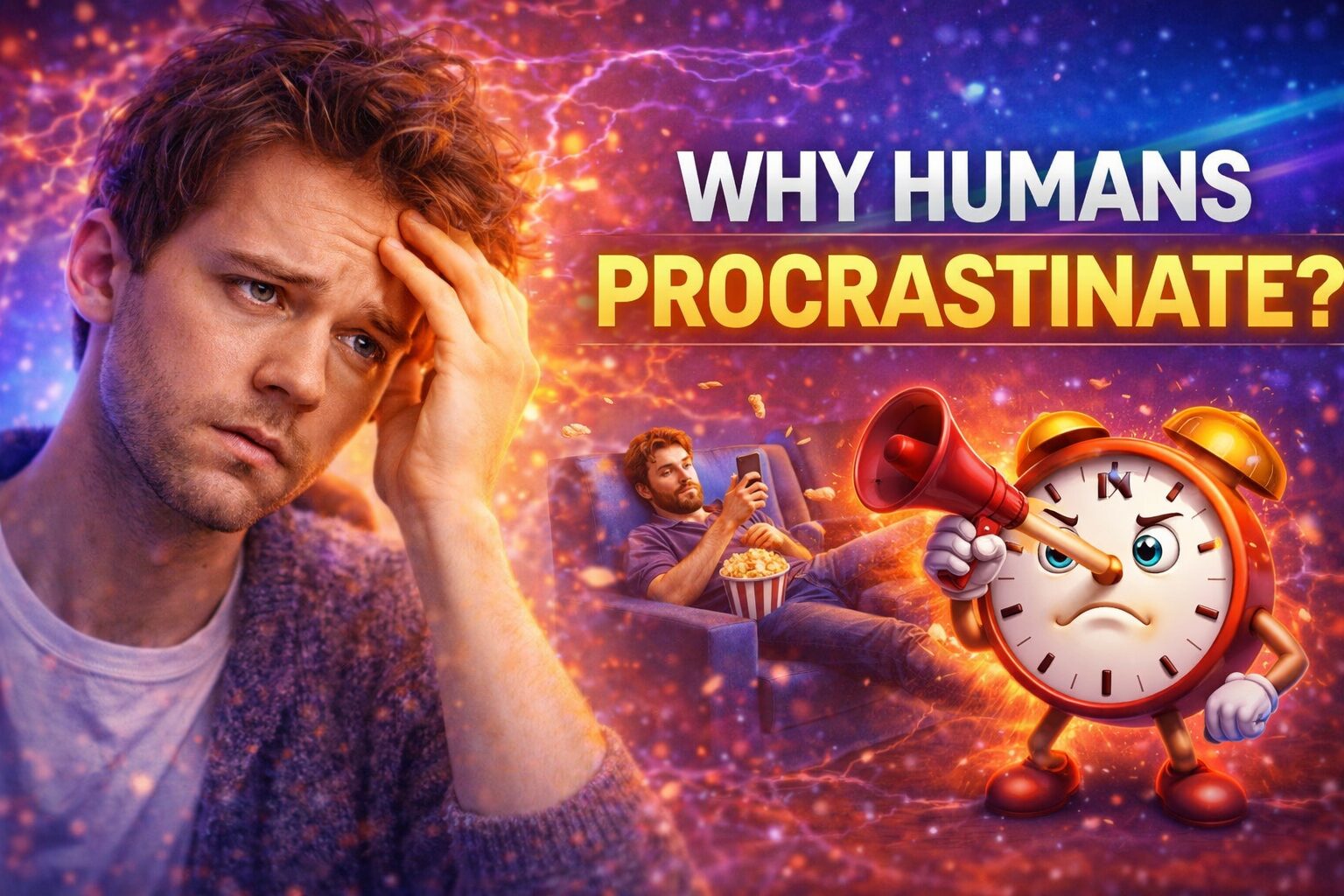
Meaning & Everyday Life
Procrastination is often less about time management than about avoiding a feeling. What research on mood, tasks and self-control says, and its limits.

Meaning & Everyday Life
Balance is less a fixed state than a pattern of meeting a few basic needs in a setting that helps or hinders. What motivation research and…

Meaning & Everyday Life
A sense of purpose is linked with better outcomes, but the research is observational. How to look for direction without waiting for certainty.
Watch
 Length 6:15
Meaning & Everyday Life
Based on its title: an episode about why people can feel directionless despite living amid unprecedented technology and choice. (Editor: the posted…
 Length 6:24
Meaning & Everyday Life
An episode on the human search for purpose, presenting it as an ongoing process built through relationships, growth, creativity, contribution and values…
Try it
Vocabulary
Go deeper
Articles and practical exercises on empathy, gratitude, connection and well-being, drawn from social-science research at UC Berkeley. Read it with the usual caution that popular summaries compress mixed evidence.
Link checked October 21, 2026
A catalogue of free Harvard-affiliated online courses. Listings carry an asterisk, so read each course page to see what is free and what costs extra, such as certificates.
Link checked October 21, 2026
A free scholarly encyclopedia written by professional philosophers, often a gentler first stop than longer specialist entries. Covers ideas about mind, self, society and technology.
Link checked October 21, 2026
Free articles, videos and short courses from the UK's Open University. Enrolling on courses and tracking progress needs a free account.
Link checked October 21, 2026
A peer-reviewed reference whose entries cover mind, consciousness, ethics, knowledge and meaning in careful scholarly detail. Entries are free to read; the site funds itself through donations.
Link checked October 21, 2026
Learn in order

5 lessons About 4 hours
Belonging, meaning, awe, time and what makes a life feel well lived, without a formula.

5 lessons About 4 hours
Five lessons on how thinking loops, delays, memories and beliefs actually work.